


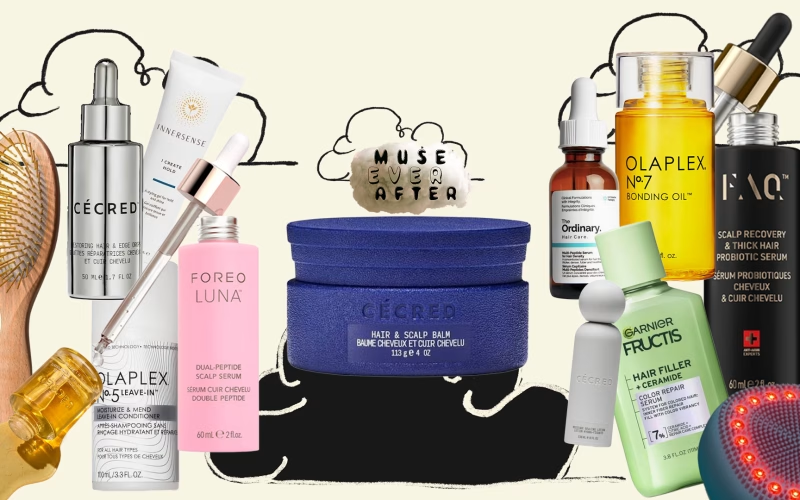
Muses, we are on a mission to transform our dry, brittle strands and tender scalps into shiny, moisturized, long, and healthy hair. We’re talking fragile, bob-length breakage into thick, flowing waist-length hair that feels as good as it looks.
Naturally, that journey has led us down the path of discovering the best shampoos, conditioners, treatments, creams, serums, stylers, oils, and everything in between to help us get on the right track toward our hair goals.
But as our hair care product collections grew, so did our confusion.
We found ourselves asking:
Is it best to use hair serums right after conditioning, or as a daily scalp refresher? Should styling gels go on top of moisturizer creams—or underneath? And where exactly do oils fit into the routine?
It all started to feel very familiar…
The Skincare Approach on Haircare Routines
If you’ve ever built a skincare routine, you already know the learning curve. Serums, toners, acne treatments, moisturizers, SPF—it can feel like a lot until it finally clicks.
For us, that clarity came with guidance from our favorite dermatologist, Dr. Carolyn Robinson, who emphasizes starting with lightweight, water-based products and gradually layering up to heavier creams.
The thinner a product is, helps it to better penetrate into the skin. When a product is thicker, it works as a coating to keep moisture in treatments locked in the skin.
Once we understood that principle, everything changed.
So naturally, we began to wonder—could the same approach apply to our haircare routines?
Short answer: Yes!
The “Skinification” of the Scalp
As it turns out, this approach is already gaining traction.
According to haircare expert Bevy Hinds of HairScripts, many of us have been layering our hair products in the wrong order. She introduces the concept of the “skinification” of the scalp—a growing trend focused on treating your scalp with the same level of care as your skin.
“You should [pay attention to scalp care], because your scalp is an extension of your skin,” Bevy explains.
She shares that once she began caring for her scalp the same way she cared for her face, she noticed a significant difference, not only in new hair growth, but in the overall health of her existing strands.
This is largely due to the evolution of modern haircare. Many professional-grade products now contain clinically active ingredients designed to hydrate, exfoliate, support cell turnover, and nourish the hair follicle—creating the ideal environment for healthy growth.
Why Haircare Product Order Matters?
Just like skincare, molecular weight plays a role in how well your products perform.
Bevy’s rule is simple: start with the lightest, most water-based products and work your way up to the heaviest.
This ensures that each layer can properly penetrate the scalp and hair before being sealed in by richer formulas.
The goal is to layer haircare active ingredients, so they penetrate, treat, and then seal… in that order.
Step 1: The Scalp Treatment Layer
After shampooing and conditioning, begin with your scalp.
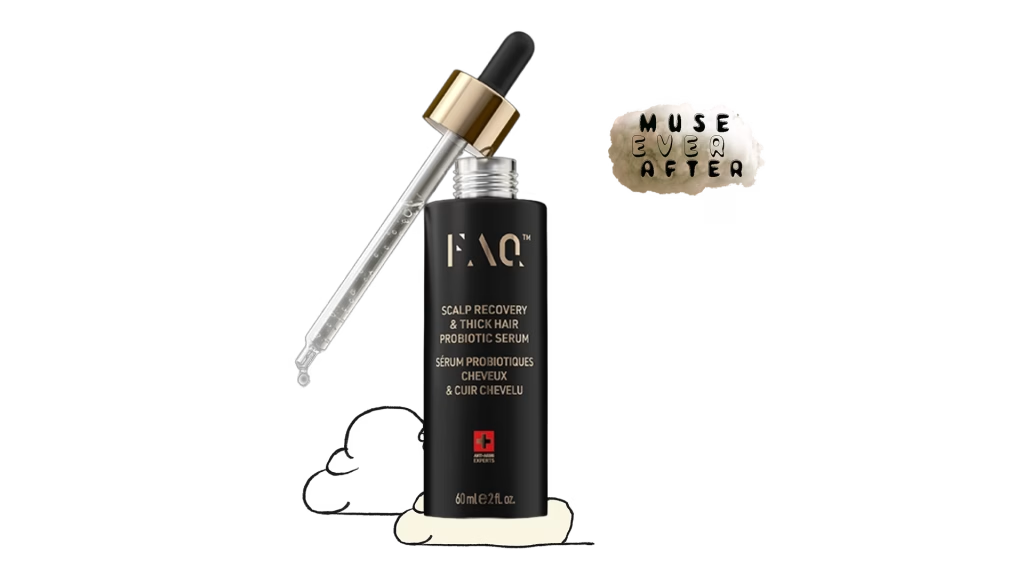
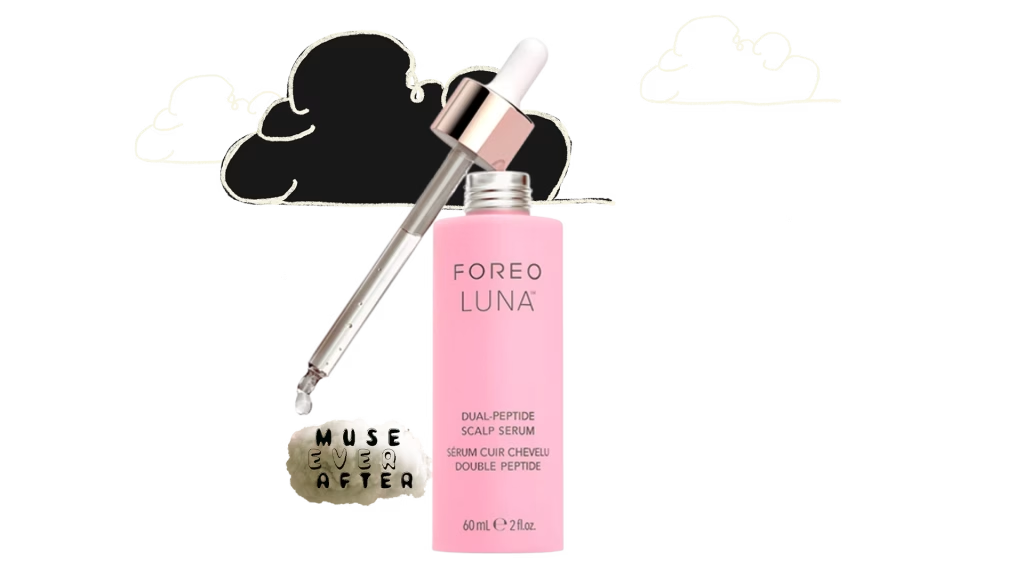
This is where water-based serums such as growth treatments, anti-shed formulas, edge drops, or clinical ingredients like minoxidil, niacinamide, and peptides should be applied first.
Gently massage the product into your scalp and allow it to absorb for at least 60 seconds before moving on.
This gives the active ingredients time to penetrate and begin working at the root level.
Step 2: The Hair Treatment Layer
Next, shift your focus to the hair itself.
Bevy emphasizes three key priorities here: hydration, strengthening, and repair.
Ingredients like hyaluronic acid, glycerin, aloe, and panthenol help attract moisture, while proteins, amino acids, and peptides support strength. Ceramides work to restore the hair’s lipid barrier.
This can be achieved with a well-formulated leave-in conditioner that addresses all three needs, or by layering multiple leave-in treatments.
If layering, follow the same principle: apply the lightest formula first and build up to richer, creamier products.
For example, start with a lightweight spray leave-in, follow with a serum-based treatment, and finish with a thicker cream.
Step 3: The Styling Layer
Once your hair is treated, you can move into styling.
For those embracing their natural texture, this is where curl creams, defining gels, and styling products come into play.
If you’re opting for a sleek blowout, silk press, or soft wand curls, this is the moment to apply heat protectants and begin styling.
At this stage, your hair has already been properly prepped, so your styling products can perform at their best.
Step 4: The Sealing Layer
Finally, it’s time to lock everything in.
Sealing helps preserve moisture and protect the hair throughout the day or week. This step typically involves oils, serums, or balms that act as occlusives.
The key here is to tailor your approach to your hair type.
If your hair is fine or low-porosity, lightweight oils applied primarily to the ends can provide a subtle micro-seal without weighing the hair down.
Medium-porosity hair can handle slightly richer oils or creams, while thicker, high-porosity or damaged hair often benefits from heavier oils, butters, or layered combinations to fully retain moisture.
Depending on your hair’s condition, you may also need to rehydrate and moisturize throughout the week to maintain results.
At The End Of The Day
Muses, healthy hair isn’t just about finding the right products—it’s about using them in the right order.
When you begin to treat your scalp like skin and layer your haircare with intention, your routine becomes more than just maintenance—it becomes a system that supports real, visible results.
Because at the end of the day, it’s not about having more products on your shelf.
It’s about making the hair product system that you have work beautifully, together.
Get Inspired
Watch Bevy share all the deets on hair product layering in “You’re Applying Hair Products WRONG (This Is Why It’s Not Growing),” a must-watch for any Muse ready to start a hair routine for stronger, longer, healthier hair.